

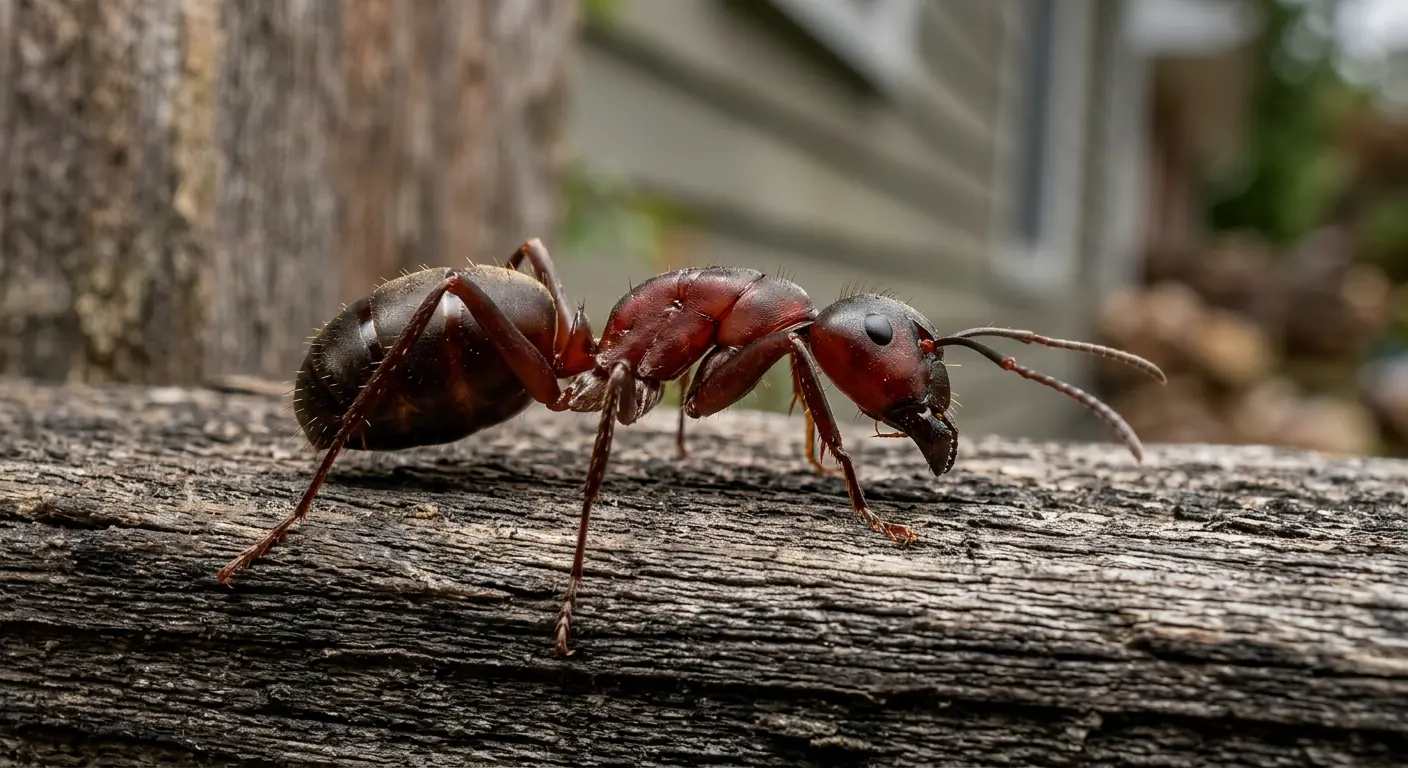
Carpenter Ants
Larger ants, typically black or dark brown, known for tunneling through wood to build nests. They don't eat wood like termites, but their tunneling can weaken structural timber over time.
Ants are one of the most common invaders in American homes — persistent, fast-moving, and skilled at finding their way in through the smallest gaps. Here's what to know about identifying them, understanding the risk, and keeping them out for good.
Ants are social insects that live in highly organized colonies, and while most species are harmless to humans, they can become a persistent nuisance once they find their way indoors. Their small size and adaptability make them one of the most frequently reported household pests.
Every ant in a colony has a specific role. Worker ants — all female — forage for food, build and maintain the nest, and care for developing larvae. The queen's sole responsibility is to lay eggs, allowing the colony to grow. Male ants exist briefly, with the singular purpose of mating with a queen.
Ants are drawn indoors by the same things that make a house feel like home to us: reliable food, water, and shelter. Kitchens, pantries, and areas with excess moisture are especially attractive.

Three-part body (head, thorax, abdomen)
Six legs and bent (elbowed) antennae
Range in size from about 1/16 inch to 1/2 inch
Travel in visible trails guided by pheromones
Nest indoors and outdoors, often in walls, soil, or foundations

Ants are opportunistic. A single scout finding a crumb on a kitchen counter can lead to a full trail of ants within hours, because ants leave behind a pheromone trail that guides the rest of the colony straight to the source.
Because entire colonies can be spread across multiple satellite nests — some indoors, some out — a few visible ants are often only a small fraction of the total population nearby. A few stray ants may just be scouts. Consistent trails or repeated sightings in the same area usually point to a nearby colony.
Larger ants, typically black or dark brown, known for tunneling through wood to build nests. They don't eat wood like termites, but their tunneling can weaken structural timber over time.
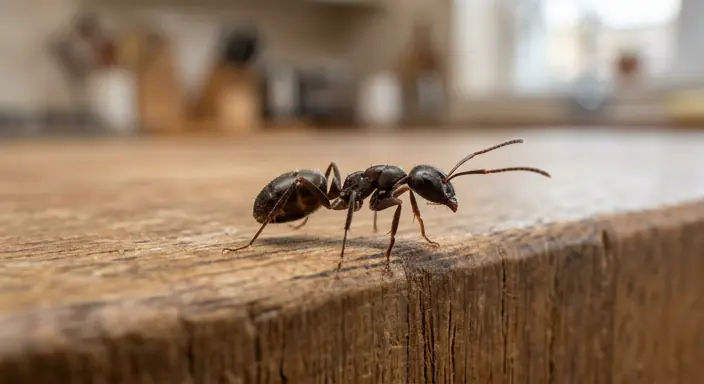
Small, dark brown to black ants that release a distinct odor when crushed; commonly found trailing near kitchens and bathrooms.
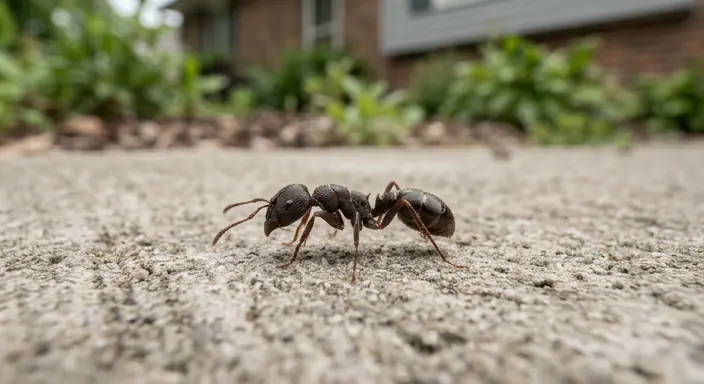
Small brown to black ants often found nesting under sidewalks, driveways, and foundations, frequently entering through cracks.
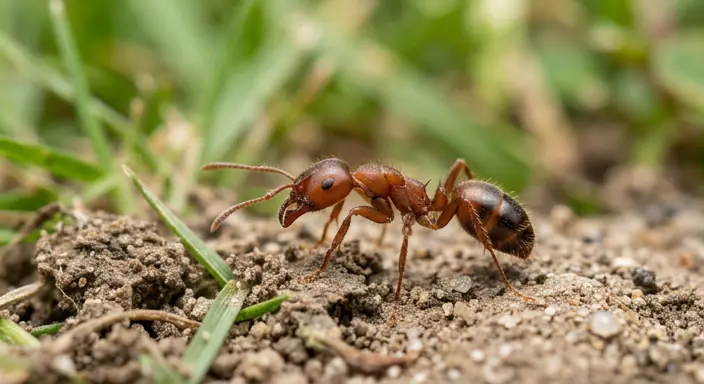
Reddish-brown ants known for painful stings, typically found in warmer climates, often nesting in visible outdoor mounds.
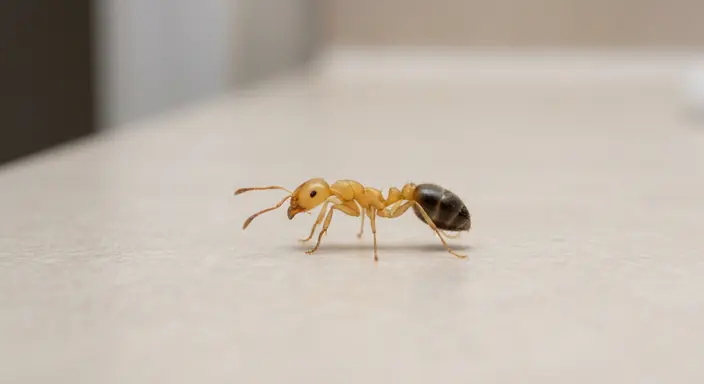
Very small, pale yellow ants that can nest indoors year-round, often traveling through wall voids and electrical conduits.
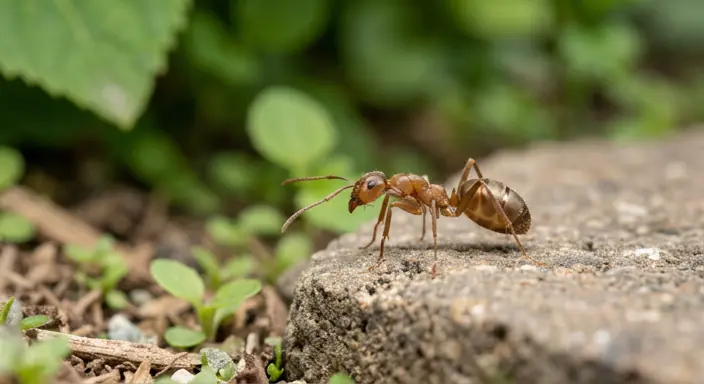
Light to dark brown ants that form large, interconnected colonies, making them especially persistent once established.
Other species homeowners may encounter include field ants, acrobat ants, crazy ants, and harvester ants.
Because many ant species look similar to the untrained eye, accurate identification is an important first step — different species often require different treatment approaches.
Most household ants are a nuisance rather than a structural threat — contaminating food and creating an unwelcome presence, but not damaging your home. Carpenter ants are the exception. As they excavate galleries within wood to house their colony, they can gradually compromise beams, framing, and other wooden structures, particularly in areas with existing moisture damage.
Effective ant control starts with identification. Because different ant species behave differently — some respond well to baiting, others require locating and treating the nest directly — an accurate assessment shapes the entire treatment plan.
Identifying entry points, trailing patterns, and likely nesting locations both inside and outside the home.
Confirming which ant species is present to guide the right treatment method.
Applying treatment to active trails, entry points, and nesting sites rather than only visible ants.
Addressing nests and colonies outside before they migrate indoors.
Monitoring the property to confirm activity has been addressed and adjusting treatment as needed.
Simple habits that make a home less attractive to ants:
Wipe up food and liquid spills promptly
Store food, including pet food, in sealed containers
Take out the trash regularly and keep bins sealed
Fix leaky faucets and reduce standing moisture
Seal cracks and gaps around doors, windows, and utility lines
Trim vegetation and mulch back from the foundation
While these steps help reduce the risk of an infestation, established colonies — especially larger or recurring ones — typically require professional treatment to fully resolve.
Not all ant species bite or sting, but some — like fire ants — can deliver a painful sting that may cause a reaction in sensitive individuals. Most common household ants are not dangerous but can still contaminate food and become a persistent nuisance.
Ants are primarily drawn indoors by accessible food, water, and shelter. Common attractants include crumbs, spills, pet food, moisture from leaks, and small entry points around doors, windows, and foundations.
Size, color, and behavior all offer clues, but many species look similar. Trail patterns, nesting location, and the type of damage (if any) can help narrow it down — a professional inspection offers the most reliable identification.
Most ants pose no structural risk. Carpenter ants are the main exception, as they tunnel through wood to build their colonies, which can weaken structural elements over time if left untreated.
Store-bought products may offer temporary relief for small, isolated sightings, but they often don't reach the nest or colony itself. Because ant colonies can be large and spread across multiple locations, professional treatment is typically more effective for lasting results.
Ants can return if entry points and attractants aren't addressed, or if nearby colonies re-invade the property. Ongoing prevention and periodic treatment help maintain long-term protection.
From tunneling and crawling to flying and squeezing through gaps you never noticed, we've seen it and kept it out. Explore how we handle each:
From a few scouts on the counter to an established colony behind the walls, ants are easier to manage the earlier they're addressed. Reach out for an inspection and a treatment plan built around your home.
(123) 456-7890No contracts. No obligation. $100 off your first treatment.


