

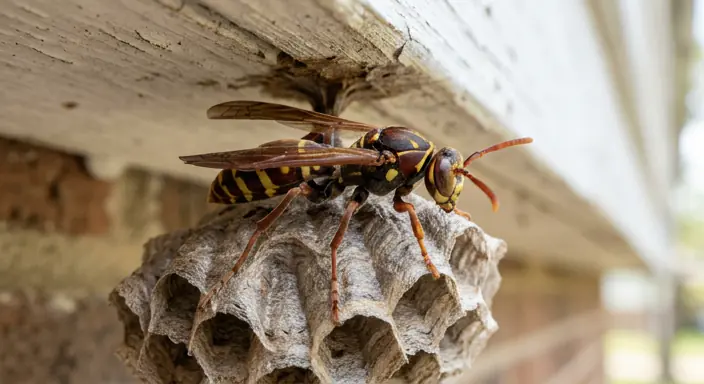
Wasps
Include paper wasps and other species that often build nests under eaves, in trees, or within wall voids. Wasps can sting multiple times and tend to become defensive if their nest is disturbed.
Bees, wasps, and hornets play important roles outdoors, but a nest near your home is a different story. Here's what to know about identifying the risk, telling species apart, and handling nests safely.
"Stinging insects" covers a range of species — most commonly wasps, hornets, and bees — each with different behavior, nesting habits, and level of risk. Many of these insects play genuinely important roles outdoors: bees are essential pollinators, and some wasps help control other insect populations. The concern isn't the insects themselves so much as where they choose to nest.
When a nest ends up under an eave, in a wall void, or somewhere else close to daily activity, the risk of an accidental sting goes up significantly. Most stinging insects aren't looking for a confrontation, but many will defend their nest aggressively if it's disturbed.

Six legs and wings; capable fliers
Live in colonies with organized social structures (workers, drones, queens)
Build nests in a variety of locations — aerial, underground, or within structures
Most active in summer and early fall
Behavior and sting risk vary significantly by species

Include paper wasps and other species that often build nests under eaves, in trees, or within wall voids. Wasps can sting multiple times and tend to become defensive if their nest is disturbed.
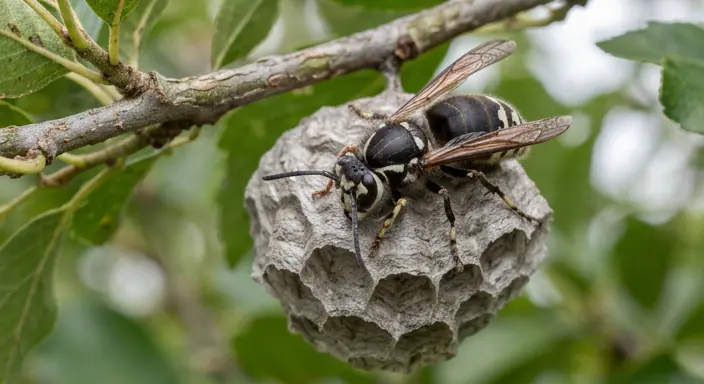
A larger, more defensive type of wasp that builds sizable nests in trees, shrubs, or on structures. Hornets are capable of delivering multiple painful stings when threatened.
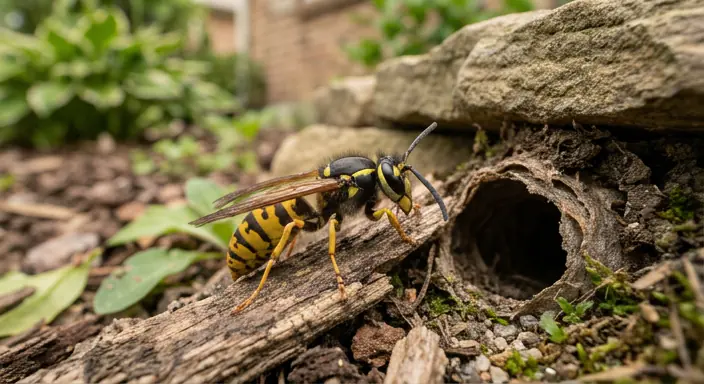
Aggressive when disturbed and known for nesting in or on the ground, unlike many other stinging insects that build aerial nests.
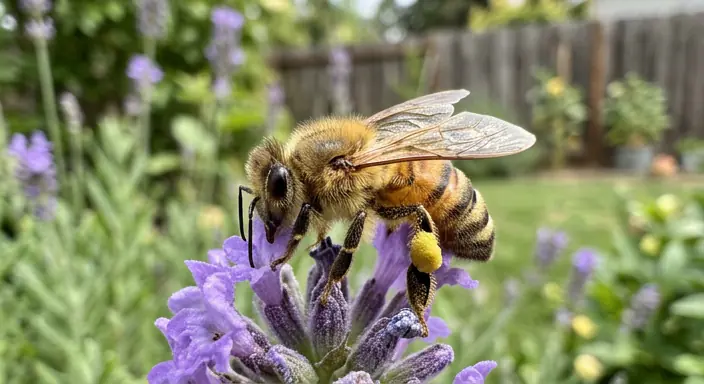
Important pollinators that are generally less aggressive than wasps or hornets, though they will sting if they feel threatened. Honey bees leave their stinger behind after stinging and die shortly afterward as a result.
Because nesting habits, aggression levels, and treatment approaches vary by species, correctly identifying what you're dealing with is an important first step.
Most stinging insects aren't inherently dangerous, but a nest near frequently used areas of a home raises real concerns. Most stings cause temporary pain, swelling, and redness at the site. Unlike honey bees, wasps, hornets, and yellow jackets can sting more than once, increasing the potential severity of an encounter. Reactions to stings vary widely by individual, ranging from mild to more serious — if you have a known allergy or experience a severe reaction after a sting, seek medical attention. Some non-stinging species, like carpenter bees, can cause damage by excavating nesting tunnels in wood such as decks, siding, or eaves.
This information is educational only and is not medical advice.
A few distinguishing details can help identify which stinging insect you're dealing with. If you're not sure which species you're seeing, a professional inspection can confirm — misidentifying a nest can lead to the wrong (and potentially riskier) removal approach.
Watch for:
Nests are often easiest to spot from a distance — approaching closely to inspect one yourself increases the risk of being stung.
Removing a nest without training is one of the more dangerous DIY pest situations a homeowner can face. Disturbing a nest — even accidentally — can trigger a defensive swarm, and species that can sting multiple times make that risk significantly worse. Common DIY approaches, like smoking out a nest, aren't recommended and can increase the chances of getting stung rather than resolving the problem. Nest removal is best left to a professional with the right training and equipment.
Effective stinging insect control starts with correctly identifying the species involved, since treatment and removal methods vary depending on nest type, location, and behavior.
Surveying the property to locate nests and identify the species present.
Confirming the type of stinging insect to determine the safest and most effective treatment.
Safely locating and removing nests using appropriate equipment and techniques.
Applying treatment to help prevent new nests from forming in the same areas.
Monitoring the property for renewed activity, particularly during peak season.
For honey bee colonies, relocation by a local beekeeper is often the most appropriate solution, given the important ecological role bees play.
Simple habits that reduce the risk of nests forming near your home:
Seal cracks and gaps where insects could enter walls, attics, or eaves
Keep outdoor trash cans tightly sealed
Clean up food and drink spills promptly, especially outdoors
Trim back overgrown vegetation and shrubs near the home
Keep flowering plants away from doors, patios, and other high-traffic entry points
Check eaves, sheds, and outdoor structures periodically for early nest activity
Catching a small, early-stage nest is far easier — and safer — to address than waiting until it grows larger.
It's not recommended. Disturbing a nest can trigger an aggressive, defensive response, and species that sting multiple times make DIY removal especially risky. Professional removal reduces the risk of stings for you and your family.
Hornets are a larger, more defensive type of wasp. Yellow jackets are also a type of wasp but are known for nesting in or on the ground, unlike many wasps that build aerial nests. All three can sting multiple times, unlike honey bees.
Not usually. Because honey bees play an important pollinator role, relocation by a local beekeeper is often a better solution than elimination, especially for established colonies.
Most stings cause temporary pain and swelling, but reactions vary by individual. Some people experience more serious allergic reactions and should seek medical attention if stung. Multiple-sting species like wasps and hornets carry additional risk compared to a single honey bee sting.
Food sources (including unsealed trash and outdoor spills), flowering plants near entry points, and accessible nesting locations like eaves, wall voids, or dense vegetation can all attract stinging insects to a property.
Bees are generally rounder and fuzzier, while wasps have longer, more slender bodies with legs that dangle while flying. Honey bees leave a stinger behind after stinging; wasps do not.
From tunneling and crawling to flying and squeezing through gaps you never noticed, we've seen it and kept it out. Explore how we handle each:
A nest near your home is easier — and safer — to address early. Reach out for an inspection and a treatment plan built around your home.
(123) 456-7890No contracts. No obligation. $100 off your first treatment.


