House Flies
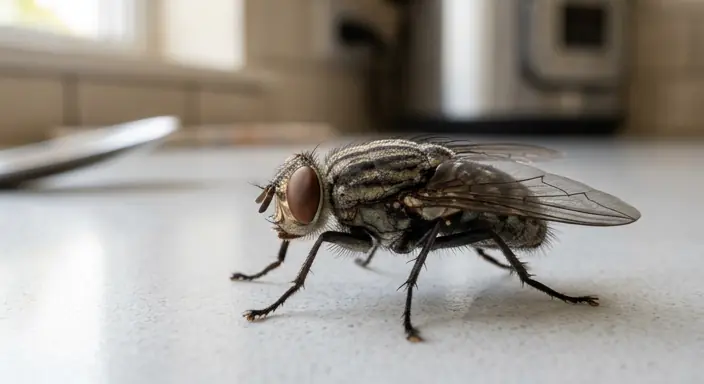
The most commonly encountered fly species indoors, drawn to a wide range of food sources and capable of breeding quickly when conditions allow.
Flies breed fast, spread easily, and are more than just background noise in your kitchen. Here's what to know about identifying an infestation and keeping flies from taking over.
Flies are fast-breeding insects that can go from a minor nuisance to a persistent problem quickly under the right conditions. A single female fly can lay hundreds of eggs over her lifetime, often in batches, which is why a small, unaddressed breeding source can lead to a much larger population in a short amount of time.
Different types of household flies are drawn to different conditions — some to ripening produce, others to drains, and others to garbage or organic waste — but nearly all are ultimately searching for food, moisture, and a place to breed.

Fast reproductive cycle: egg, larva, pupa, and adult stages
Strong sense of smell, particularly for food odors and fermenting sugars
Different species are drawn to different breeding sources
Most active in warm weather, especially late summer and early fall
Often gather in visible clusters near food, light, or moisture sources

Flies can enter through open doors, windows, or small gaps — sometimes accidentally — but persistent activity usually points to an attractant or breeding source nearby.
Because flies breed quickly once a source is established, even a small, overlooked attractant — like a bit of buildup in a drain — can support ongoing activity long after the visible mess is cleaned up. Seeing a single fly doesn't always mean there's an infestation — flies can enter accidentally. Repeated sightings, clusters, or maggots are stronger indicators of an active breeding source.
The most commonly encountered fly species indoors, drawn to a wide range of food sources and capable of breeding quickly when conditions allow.
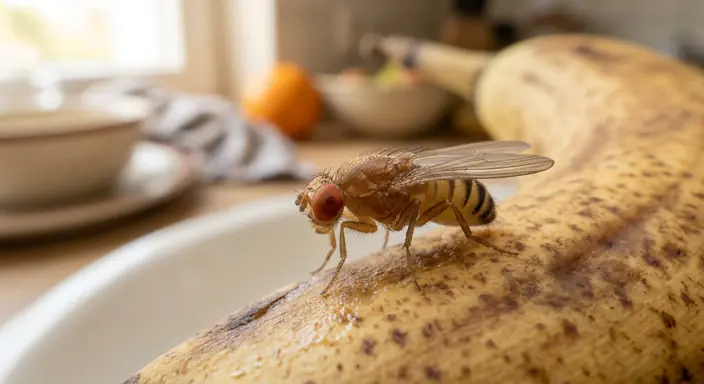
Small flies strongly attracted to ripening or fermenting produce, often appearing seemingly out of nowhere near kitchens and fruit bowls.
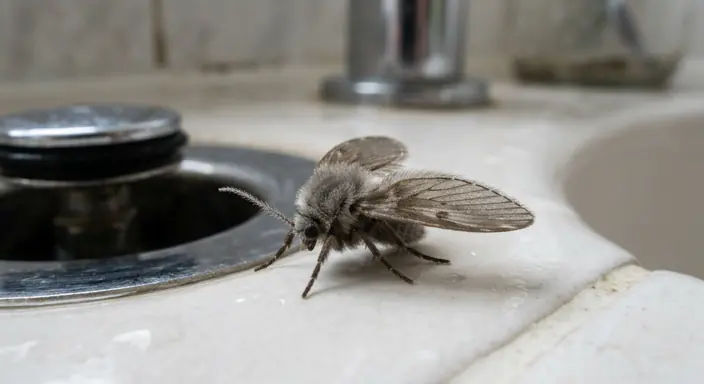
Small, fuzzy flies that breed in the organic buildup found in drains, often noticed near sinks, showers, or floor drains.
Because different fly species are drawn to different breeding sources, correctly identifying which type is present helps target treatment where it will be most effective.
Beyond being a persistent nuisance, flies can pose sanitation concerns worth taking seriously. Flies can pick up bacteria from the surfaces they land on and carry it elsewhere, including food preparation areas. Repeated fly activity in kitchens or food storage areas raises the risk of contamination. Good sanitation and prompt treatment help reduce this risk. If you have specific health or food-safety concerns related to a fly infestation, consult a medical professional or your local health authority.
This information is educational only and is not medical advice.
Effective fly control focuses on locating and addressing the breeding source, not just the flies that are visible day to day.
Assessing the interior and exterior of the property to identify breeding sites and entry points.
Confirming which type of fly is present to guide the most effective treatment.
Using appropriate methods such as bait traps, exterior treatments, or drain-focused solutions depending on the species and breeding source.
Placing traps or treatments around entry points to reduce flies before they reach the home.
Monitoring activity and adjusting treatment as needed to confirm the source has been addressed.
Simple habits that make a home less attractive to flies:
Keep garbage cans tightly sealed and take out trash regularly
Clean up food spills and pet waste promptly
Store produce properly and don't let it overripen on the counter
Address moisture issues such as leaking pipes or clogged drains
Keep window and door screens in good repair
Seal gaps around doors and windows
Because flies can breed in small, easy-to-overlook sources like drain buildup or a bit of standing water, consistent sanitation is one of the most effective everyday defenses.
Not necessarily. Flies can enter accidentally through open doors or windows. Repeated sightings, clusters in a specific area, or finding maggots are stronger signs of an active breeding source nearby.
Fruit flies are strongly attracted to ripening or fermenting produce and can breed in very small amounts of residue, including inside drains or on surfaces that seem clean. A thorough inspection can help identify the exact source.
Fruit flies are typically drawn to ripening produce and fermenting substances, while drain flies breed in the organic buildup inside drains. Though they can look similar at a glance, their breeding sources — and the right treatment approach — differ.
Flies can pick up bacteria from surfaces and carry it elsewhere, including into food preparation areas, which raises sanitation concerns. Good cleaning habits and prompt treatment help reduce this risk.
Flies tend to become more active in late summer and early fall as they search for warmer areas to rest and reproduce, particularly around homes that offer reliable food, moisture, or shelter.
Basic sanitation steps help, but flies breed quickly and can have hidden sources — like drain buildup — that are easy to miss. Professional treatment that identifies and addresses the actual breeding source is typically more effective for lasting results.
From tunneling and crawling to flying and squeezing through gaps you never noticed, we've seen it and kept it out. Explore how we handle each:
A few flies today can mean a much bigger problem tomorrow. Reach out for an inspection and a treatment plan built around your home.
(123) 456-7890No contracts. No obligation. $100 off your first treatment.