

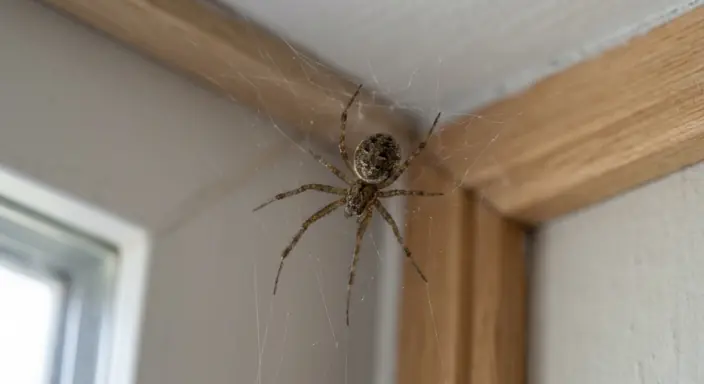
House Spiders
Common, non-aggressive spiders that build webs in corners, basements, and other quiet indoor spaces. Generally not a health concern, though their webs are an unwelcome nuisance.
Finding a spider indoors is unsettling enough — finding out where it came from is often the bigger concern. Here's what to know about identifying common household spiders, what draws them in, and how to keep them out.
Spiders are arachnids, not insects — a distinction that shows up in their anatomy. Instead of six legs and three body segments, spiders have eight legs and just two body segments: the cephalothorax and the abdomen. Most species also have eight eyes, though vision plays a bigger role for some hunters than for others.
Spiders are natural predators, feeding primarily on insects like flies, mosquitoes, and ants. That's actually one reason spiders show up indoors in the first place — a spider following its food source into your home is often a sign there's an existing insect population nearby.

Eight legs and two body segments (no antennae, no wings)
Typically eight eyes, arranged differently by species
Range widely in size, from tiny to several inches
Molt as they grow, shedding their exoskeleton
Prefer quiet, undisturbed areas — making early infestations easy to miss

Spiders are drawn indoors by two main things: shelter and food. A home with an existing insect population gives spiders a reliable food source, while cracks, gaps, and cluttered storage areas offer the undisturbed conditions they prefer for building webs and laying egg sacs.
Because a single egg sac can hatch a large number of spiderlings at once, a minor sighting can turn into a noticeably larger presence in a short amount of time. A web here or there isn't unusual. Repeated webs, egg sacs, or regular sightings in the same areas typically point to an established population.
Common, non-aggressive spiders that build webs in corners, basements, and other quiet indoor spaces. Generally not a health concern, though their webs are an unwelcome nuisance.
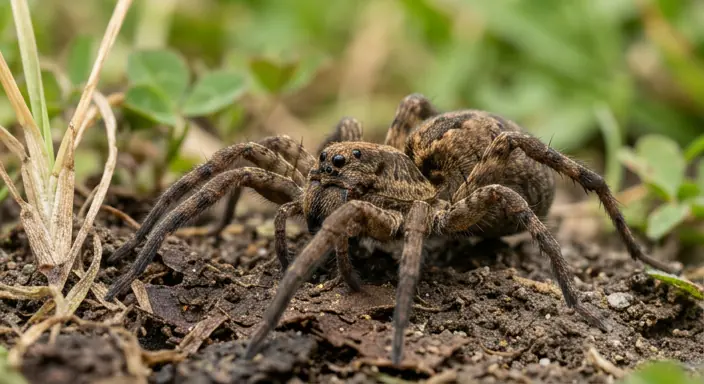
Large, fast-moving hunters that don't spin webs to catch prey. Instead, they actively hunt on foot, which can bring them directly into living spaces.
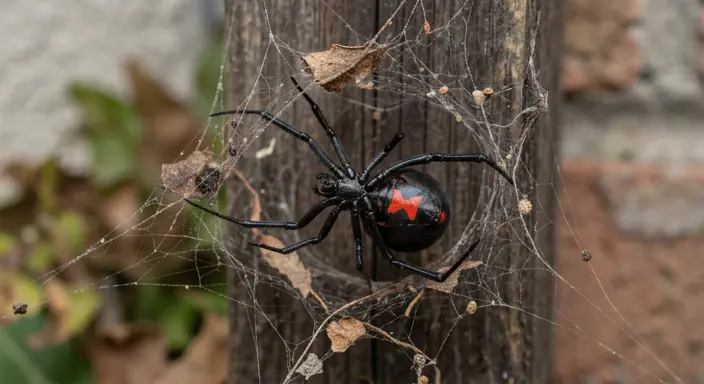
Recognizable by a red hourglass marking on a shiny black body. Black widows are venomous and tend to stay hidden in quiet spots like woodpiles or garages; they are not aggressive unless threatened.
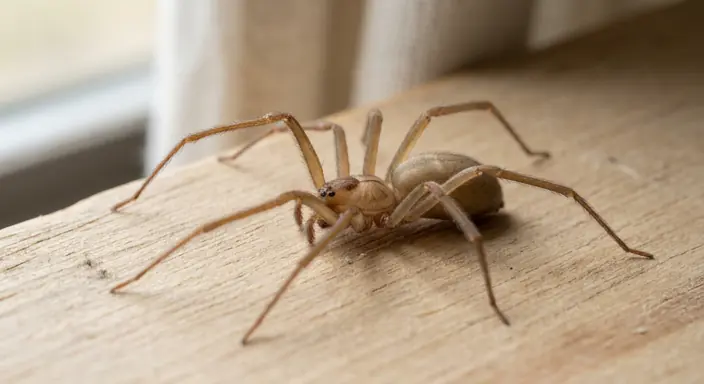
Known for a violin-shaped marking and reclusive habits, brown recluse spiders are venomous and typically found in dark, undisturbed areas.

Known for large, distinctive circular webs, often found outdoors around porches, eaves, and gardens.
Other spiders homeowners may encounter include cobweb spiders, funnel weaver spiders, ground spiders, and jumping spiders.
Because many spider species look similar and some require a more careful approach than others, accurate identification is an important first step in choosing the right treatment.
Most household spiders are harmless and prefer to avoid contact with people. However, a small number of species — including black widow and brown recluse spiders — are venomous and warrant extra caution.
This information is educational only and is not medical advice.
Effective spider control starts with identifying which species are present and where they're most active, since treatment approaches can vary depending on the type of spider and the severity of activity.
Checking hidden interior and exterior areas to identify nesting sites and confirm which species are present.
Clearing existing webs and egg sacs to interrupt breeding cycles.
Applying repellent dust or liquid barrier treatments to key harborage areas such as corners, eaves, garages, and entry points.
Using placement tools in high-traffic areas to track activity and confirm treatment effectiveness.
Sealing cracks, gaps, and entry points to help keep spiders from moving back indoors.
Simple habits that make a home less attractive to spiders:
Vacuum regularly, including corners, baseboards, and window sills
Remove webs and egg sacs as soon as they're noticed
Reduce clutter, and store boxes off the floor and sealed tightly
Keep firewood and outdoor debris away from the foundation
Seal cracks and gaps around doors, windows, and utility lines
Address any existing insect activity, since spiders often follow their food source
Because spiders are drawn in by other pests, general pest prevention around the home also helps reduce the conditions that attract them in the first place.
Most household spiders are harmless and prefer to avoid people entirely. A small number of species, such as black widows and brown recluses, are venomous and should be treated with extra caution, though bites are uncommon.
Spiders are primarily drawn indoors by an available food source — typically other insects — along with quiet, undisturbed areas for building webs. Moisture, clutter, and small entry points can also make a home more inviting.
No. While many spiders spin webs to catch prey, others — like wolf spiders — hunt on foot instead. Some species build tunnel-like burrows with a trap-door entrance rather than a traditional web.
Size, color, markings, and behavior all provide clues, but many species can look similar. A professional inspection offers the most reliable way to confirm which species is present, especially if venomous spiders are a concern.
DIY methods like vacuuming webs and reducing clutter can help temporarily, but they often don't reach hidden nesting sites in wall voids, attics, or crawl spaces. Professional treatment is typically more effective for lasting results.
Spiders can return if entry points and food sources aren't addressed, particularly if other insects remain present. Ongoing prevention and periodic treatment help maintain long-term protection.
From tunneling and crawling to flying and squeezing through gaps you never noticed, we've seen it and kept it out. Explore how we handle each:
A web in the corner or a spider in the basement is often a sign of something more. Reach out for an inspection and a treatment plan built around your home.
(123) 456-7890No contracts. No obligation. $100 off your first treatment.


