

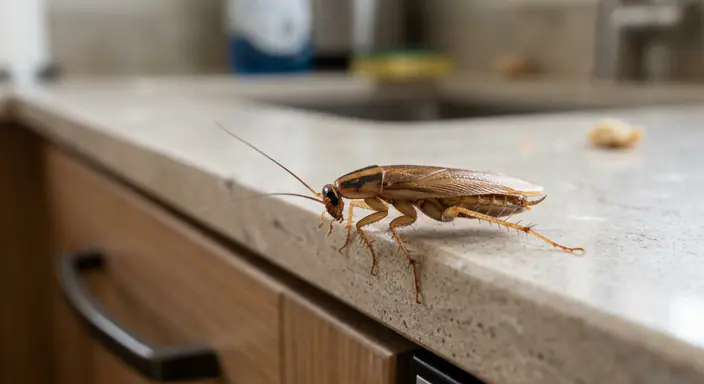
German Cockroach
One of the most common indoor species, typically found near warmth and moisture in kitchens and bathrooms. Known for rapid reproduction, making early treatment especially important.
Cockroaches are resilient, fast-breeding, and skilled at staying hidden — spotting one is often a sign there are more nearby. Here's what to know about identifying an infestation and getting ahead of it.
Cockroaches are among the most adaptable and resilient pests found in homes, capable of surviving in a wide range of environments. They're nocturnal by nature, spending daylight hours hidden in dark, secluded spaces and becoming most active at night in search of food, water, and shelter.
Because cockroaches are excellent at staying out of sight, seeing one during the day often signals a larger population nearby than what's immediately visible — daytime activity can mean hiding spots are already overcrowded.

Six legs, with wings on many species (though not all use them for sustained flight)
Nocturnal, most active in low light
Highly adaptable, able to survive in a variety of conditions
Reproduce quickly, with egg cases hidden in protected areas
Attracted to food, water, and warm, humid environments

Cockroaches are drawn indoors by consistent access to food, water, and shelter, and they tend to settle wherever those needs are most reliably met — often kitchens, bathrooms, and other areas with regular moisture.
Cockroaches release pheromones in their droppings that signal safe harborage to others, which means a single hidden aggregation can attract and support a growing population over time. Because cockroaches are nocturnal and skilled at hiding, these indirect signs are often easier to spot than the cockroaches themselves.
One of the most common indoor species, typically found near warmth and moisture in kitchens and bathrooms. Known for rapid reproduction, making early treatment especially important.
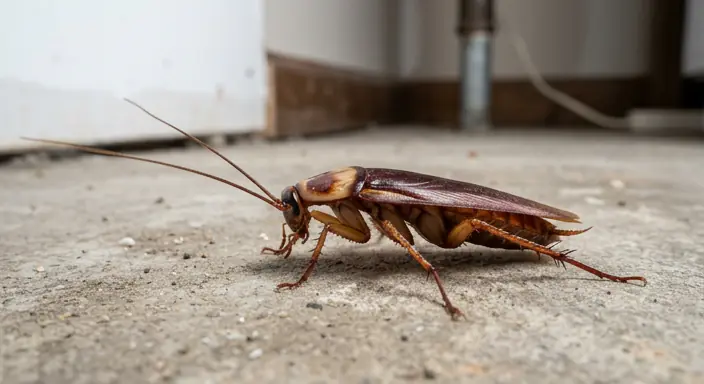
Among the largest common species, often found in basements, drains, and other damp areas.
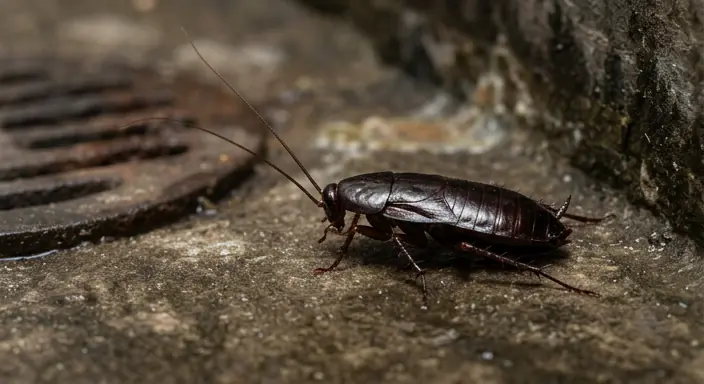
Prefers cooler, damp environments and is often associated with basements, drains, and areas with excess moisture.
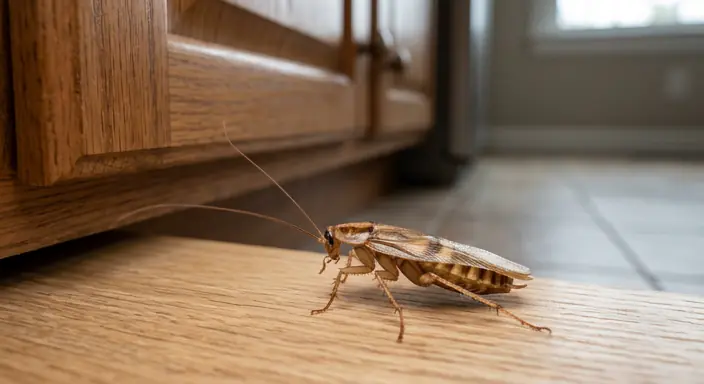
Tends to prefer warmer, drier areas of a home compared to other species, including areas away from kitchens and bathrooms.
Because different species have different habits and preferred environments, correctly identifying the species present helps shape the most effective treatment approach.
Beyond being an unwelcome presence, cockroaches are associated with health considerations that make prompt treatment worthwhile. Cockroaches can carry bacteria on their bodies, which may contaminate surfaces and food storage areas. Cockroach droppings, saliva, and shed skin contain allergens that are associated with respiratory symptoms, particularly for individuals with asthma or allergies. Regular cleaning and sealing entry points can help reduce exposure to these allergens. If you or a family member experience respiratory symptoms you believe may be related to a cockroach infestation, consult a medical professional.
This information is educational only and is not medical advice.
Effective cockroach control targets both visible activity and hidden aggregations, since roaches that aren't directly seen are often the larger part of the problem.
Thoroughly checking kitchens, bathrooms, basements, and other high-risk areas for harborage sites, moisture sources, and entry points.
Confirming which cockroach species is present to guide the most effective treatment.
Placing baits in areas where cockroaches travel and feed, allowing treatment to spread back to hidden populations.
Applying additional treatment methods as needed based on the severity and location of activity.
Scheduling additional service as needed to confirm activity has been addressed.
Simple habits that make a home less attractive to cockroaches:
Store dry food in tightly sealed containers
Clean up crumbs, spills, and grease promptly
Keep garbage in sealed bins and empty them regularly
Fix leaks and reduce excess moisture, especially in kitchens and bathrooms
Reduce clutter, including stacked boxes, newspapers, and cardboard
Seal cracks and gaps around pipes, baseboards, and appliances
Rinse recyclables before storing them indoors
Good sanitation addresses the food, water, and shelter cockroaches rely on — but because they hide in hard-to-reach spaces and reproduce quickly, established infestations typically require professional treatment to fully resolve.
Cockroaches are nocturnal and typically stay hidden during the day. Seeing them during daylight hours can be a sign that a hiding population has grown large enough to spill into visible areas.
Cockroaches can technically bite, but it's rare. They're far more likely to feed on crumbs, grease, and other food sources rather than seeking out people.
Cockroaches can carry bacteria and produce allergens through their droppings, saliva, and shed skin, which are associated with respiratory symptoms for some individuals, particularly those with asthma or allergies. If you have health concerns related to a cockroach infestation, consult a medical professional.
Size, color, and preferred habitat all offer clues — for example, German cockroaches favor warm, humid kitchens and bathrooms, while American and Oriental cockroaches are more commonly found in damp basements and drains. A professional inspection offers the most reliable identification.
DIY sprays, traps, and foggers often only affect the roaches you can see, leaving hidden aggregations untouched. Because cockroaches reproduce quickly and hide in hard-to-reach spaces, professional treatment that targets both visible and hidden populations is typically more effective for lasting results.
Cockroaches can return if food, water, and entry points aren't addressed, or if nearby units or structures have ongoing activity. Good sanitation combined with periodic treatment helps maintain long-term protection.
From tunneling and crawling to flying and squeezing through gaps you never noticed, we've seen it and kept it out. Explore how we handle each:
Seeing one cockroach is rarely the whole story. Reach out for an inspection and a treatment plan built around your home.
(123) 456-7890No contracts. No obligation. $100 off your first treatment.


