

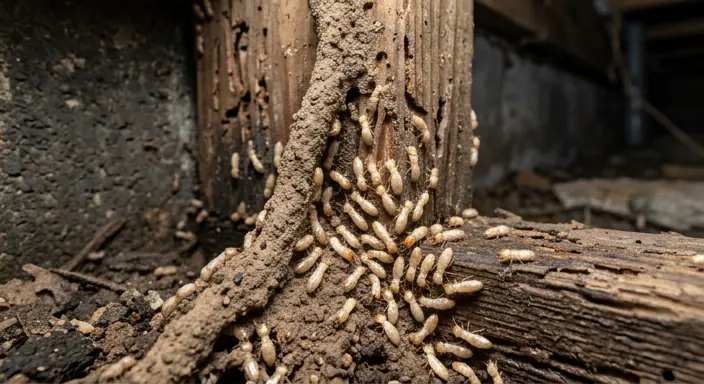
Subterranean Termites
The most common type, living in soil and building mud tubes to reach wood sources above ground. Because they require contact with soil or moisture, mud tubes are one of their most identifiable signs.
Termites can cause significant structural damage long before the signs become obvious. Here's what to know about identifying activity early, understanding the risk, and protecting your home.
Termites are social insects that live in highly organized colonies, feeding primarily on cellulose found in wood, paper, and other plant-based materials. Their specialized digestive systems, aided by microorganisms in their gut, allow them to break down cellulose in ways most other insects can't — which is exactly what makes them capable of causing serious damage to a home's wooden structures over time.
Termite colonies can grow enormously, with some of the largest recorded colonies numbering in the millions. Colonies can extend several feet underground and spread out over a wide area as termites forage for food, making an infestation far larger than what's visible at the surface.

Social insects living in large, organized colonies
Feed on cellulose — wood, paper, cardboard, and some fabrics
Colonies are divided into castes with different roles
Activity can go undetected for extended periods
Different types (subterranean, drywood, dampwood) behave differently
Workers — The most numerous members of the colony, responsible for foraging, feeding the colony, and building tunnels and nests. Cream-colored and soft-bodied, workers are also the caste responsible for the structural damage termites are known for.
Soldiers — Tasked with defending the colony, particularly against ants. Soldiers resemble workers but have larger heads and mandibles suited for defense.
Alates (swarmers) — Winged reproductive termites capable of starting new colonies. Alates don't cause structural damage themselves, but spotting them — or their discarded wings — is a strong sign of nearby termite activity.

Termites are drawn to moisture and a reliable food source, and a home can offer both. Improper drainage, wood-to-soil contact, and small cracks or gaps in the foundation can all create opportunities for termites to gain access.
Landscape mulch is often associated with termite activity, but mulch itself doesn't attract termites — the moisture it retains simply creates favorable conditions if termites are already foraging nearby. Because termite activity can go undetected for months or even years, a home showing none of these signs isn't necessarily termite-free — regular inspection is the most reliable way to catch activity early.
The most common type, living in soil and building mud tubes to reach wood sources above ground. Because they require contact with soil or moisture, mud tubes are one of their most identifiable signs.
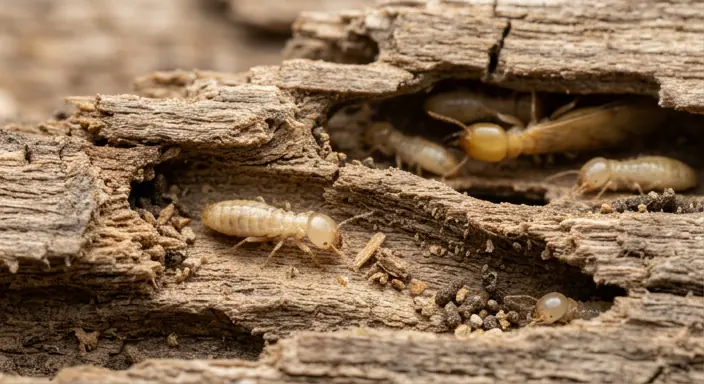
Nest directly within the wood they infest and don't require contact with soil, which can make them harder to detect. Frass (pellet-like droppings) is a key sign of drywood termite activity.
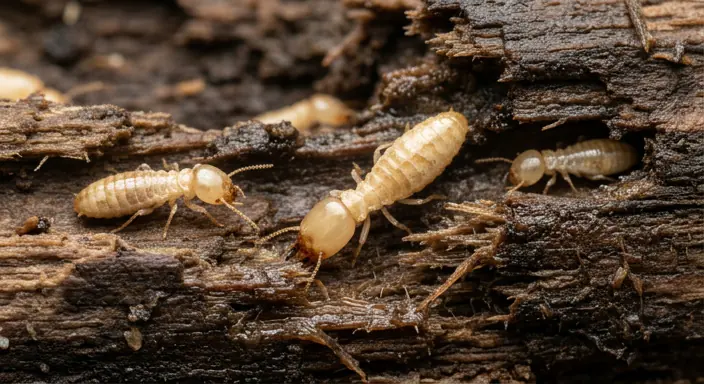
Prefer wood with high moisture content, often associated with water damage, leaks, or decaying wood in and around a structure.
Because treatment approaches differ by type, correctly identifying which termites are present is an important first step in addressing an infestation effectively.
Termite swarmers are often mistaken for flying ants, since both appear during swarming season and share a similar winged appearance at a glance. A few differences can help tell them apart.
If you're unsure which you're seeing, a professional inspection can confirm. It's also worth noting that termites feed on cellulose-based materials like wood, not on people or animals — soldier termites are capable of biting if handled directly, but termites don't seek out people or pets as a food source. Their impact comes from structural damage, not from bites or stings.
Termites are drawn to moisture and a reliable food source, and a home can offer both. Because their specialized digestion allows them to break down cellulose in wood, paper, and other plant-based materials, an active colony can cause serious damage to a home's wooden structures over time — often well before any visible signs appear. Termite activity can go undetected for months or even years, which is why regular inspection matters even in a home that shows no obvious warning signs.
Because different termite types call for different treatment methods, an accurate inspection and identification process shapes the entire approach.
Assessing the property for signs of activity, moisture conditions, and risk factors, and identifying which termite type is present.
Choosing an appropriate method based on termite type and severity, which may include liquid soil treatments, bait stations, or fumigation for drywood termites.
Applying termiticide to soil around the foundation to create a protective barrier against subterranean termites.
Placing low-visibility stations that allow termites to carry bait back to the colony, reducing populations over time.
Monitoring for new activity and reapplying treatment as needed to maintain protection.
Simple habits that reduce termite risk around a home:
Fix leaks and correct drainage issues promptly
Avoid wood-to-soil contact around decks, framing, and structures
Keep firewood, lumber, and wood debris away from the foundation
Repair or replace damp or decaying wood
Keep mulch several inches away from the foundation
Trim vegetation away from exterior walls
Schedule regular inspections, since early detection is the most effective form of prevention
Because termite damage often isn't visible until an infestation is well established, routine professional inspection is one of the most effective prevention tools available — far more reliable than waiting for visible signs.
Termite activity can go undetected for months or even years, so the absence of visible signs doesn't guarantee a termite-free home. Common signs include mud tubes, hollow-sounding wood, frass, and discarded wings near windows or doors. A professional inspection is the most reliable way to confirm.
No. Only alates, the reproductive caste responsible for starting new colonies, have wings and fly. These "swarmers" typically appear in large numbers during warmer months, often triggered by rain and humidity.
Termites feed on cellulose-based materials, not on people or animals. Soldier termites can bite if directly handled, but termites don't target people or pets as a food source.
Mulch itself doesn't attract termites, but the moisture it retains can create favorable conditions for termites already active nearby. Keeping mulch away from the foundation is a simple precaution.
Termite swarmers have a broad, straight waist, straight antennae, and two pairs of equal-length wings. Flying ants have a pinched waist, bent antennae, and two pairs of unequal-length wings.
Disturbing a colony without a complete treatment plan can cause termites to relocate to another hidden part of the structure rather than resolving the problem. Because termite type and severity both affect the right treatment approach, professional inspection and treatment are typically necessary for a lasting solution.
From tunneling and crawling to flying and squeezing through gaps you never noticed, we've seen it and kept it out. Explore how we handle each:
Termite activity is often invisible until real structural damage has occurred. Reach out for an inspection and a treatment plan built around your home.
(123) 456-7890No contracts. No obligation. $100 off your first treatment.


